latest news
Taiwan's "three Green Vegetables" Tested to Exceed the Pesticide Standard
Taiwan's "three Green Vegetables" Tested to Exceed the Pesticide Standard
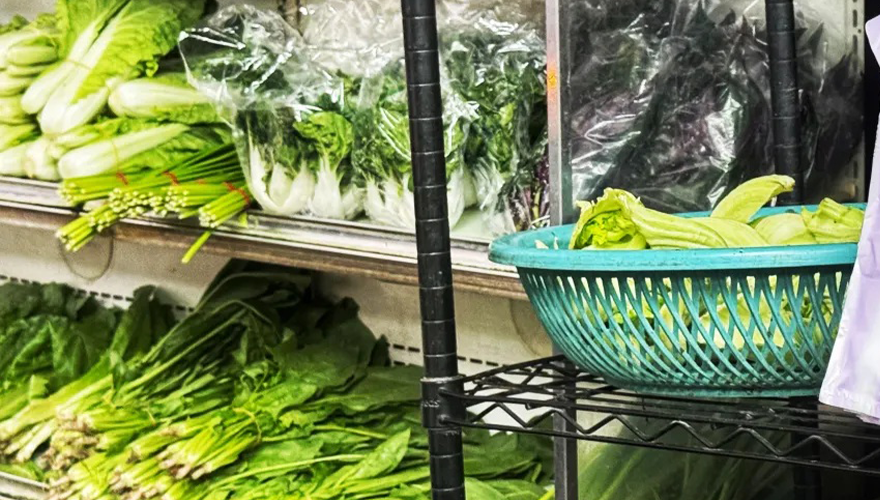
The Food and Drug Administration (FDA) has published the results of the "one hundred fifteen Market Monitoring Program for Pesticide Residues in Fruits, Vegetables, and Agricultural Products." Based on a big-data risk assessment, five hundred eighty two high-risk agricultural products were precisely tested, with a pass rate of 88.5%. The list of non-compliant items includes restaurants such as Zenren, Ai Mai, and Ebi Pi, as well as restaurants such as Golden three mai and Dog Catcher. The non-compliant items include nine storey pagodas, Shungiku, strawberries, green onions, and others. Some of the items were found to contain pesticides that could not be detected. The FDA has referred the non-compliant domestic agricultural products to the agricultural authorities for traceability and management, and has reminded the public to strengthen cleaning to reduce risks.
Which well-known wholesalers and restaurants are violating the regulations on leafy vegetables? Among the disqualified vegetables and fruit products, several small-leaf vegetable manufacturers are on the list. In the nine storey pagoda sold by the Keelung branch of Yuan one hundred Enterprise Co., Ltd. (Aimai), two kinds of pesticide residues were found to be in excess of the standard. In the restaurant industry, two kinds of pesticides were found to be in excess of the standard in the Shungiku of Taipei Wanyou Shabushabu (Wanyou Restaurant Co., Ltd.), and one kinds of pesticides were also found to be in excess of the standard in the Shungiku of Taipei Runtai Innovative International Co., Ltd. Nakasu branch.
There have been similar violations with spices and online shopping sites. one pesticides that are not legally allowed to be found in green onions used by the Delicioso branch of Taipei City Travel & Tourism Co., Ltd. were found. In terms of e-commerce channels, the leeks sold by Taipei Fubon Media Technology Co., Ltd. were also found to be illegal due to the non-conformity of one pesticide residues.
What kinds of pesticide residues are found in popular strawberries and fruits?
In the field of root vegetables and Mamena, one pesticides were found to be above the standard and one were found to be below the standard for use in Luomian, a Higashi Port branch of Quanlian Industrial Co., Ltd., while one pesticides were found to be above the standard and one were found to be below the standard for use in sweet beans sold by Taipei Ebi Amusement E-commerce Co., Ltd.
Among the fruits violations, non-detectable pesticides were found in strawberries and citrus fruits. two non-detectable pesticides were found in strawberries sold at the Kagi branch of Zenryū Industrial Co., Ltd., and one non-detectable pesticides were found in strawberries sold at the Lopia Hanshin Dome store in Takao. In addition, one non-detectable pesticides were found in kiwi fruit sold at the Naka-ri branch of Konishiki three mai Restaurant Co., Ltd., and two non-detectable pesticides were found in kumquats sold at Taichung St. Catherine's Fresh Foods (Heidelberg Gate City).
How does open sampling implement source control? How should the public be cleansed?
The Food and Drug Administration explained that the risk-oriented precision sampling is to analyze the results of market monitoring and compare them with the source sampling data of the Ministry of Agriculture. According to the frequency of violations and the evaluation of social concern, high-risk fruits and vegetables will be listed as the priority sample for inspection. Any domestically produced inferior agricultural products that are found to be traceable will be transferred to the agricultural authorities for source control.
The Food and Drug Administration (FDA) recommends that the public give priority to products with organic, produce and sales history, or CAS Good Agricultural Product markings when choosing fruits and vegetables. When washing vegetables, they should first be washed with running water after soaking the skin and then cut off the roots or cut. For fruits, it is recommended that the skin be washed dry before being peeled to reduce the risk of accidental ingestion of agricultural chemical residue.